
170. The Baby Clash or the Impact of the Arrival of a Child in the Couple
You have just had a child and you have the impression that conflicts are becoming more and more frequent in your couple?
You have the impression that your relationship has taken a hit since the arrival of baby and you would like to know if it is more than just the effect of fatigue.
You have already heard of the baby clash and you would like, as Anna Roy says, “to learn to become parents without killing each other”.
You want to have the keys to understand and put an end to tensions in the couple to fully enjoy your parenthood.
This episode will help you understand why the baby clash happens, why it is almost normal and that it concerns almost all parents (and I think even more so in our current society) and how to put an end to tensions and overcome this crisis. Having accompanied numerous couples, the tensions around the arrival of a child are among the strongest couple crises, which often lead to divorce.
❤️ Watch my webinar on how to finally be happy in love!
Why the baby clash happens
The first 3 years of a child’s life are particularly challenging on many levels: a birth and a postpartum that can go more or less well, lack of sleep, the child being sick, breastfeeding, mental load, juggling between childcare arrangements and work, lack of support from close family and also quite simply a little being who needs time, presence and who in the space of 3 years will evolve enormously.
For the woman, there is the added impact of having experienced a pregnancy, a birth and its postpartum which depending on circumstances can bring major changes in bodily terms (scarring for caesareans, episiotomy…), in hormonal terms, have impacts on her mental health (depression) and physical health (mini burnout linked to exhaustion of her reserves). Personally, I had to reclaim my body which was never the same after my birth and I also felt for a long time the consequences of the caesarean and hormonal disruption on my body, my sleep and my libido.
For the man, the challenge is also there in the sense that it is not always easy to understand the changes in the woman and what she is experiencing internally, to find his place as a father and husband and everything that this can awaken from his past.
For you
FREE Webinar "HOW TO FREE OURSELVES FROM THE PATTERNS THAT PREVENT US FROM BEING HAPPY IN LOVE?"
Subscribe now to my newsletter and receive the replay of the webinar how a wound from the past is created ?
* Mandatory fields
If you register for this webinar, you will be subscribed to my newsletter and you will be able to receive offers from me. You can unsubscribe at any time. Please read my
privacy policy (german only), to see how I process the data.
Studies show that the arrival of a child challenges couple satisfaction
The Gottman Institute even explains that satisfaction in marriage starts to decline with the arrival of a child, the goal for couples being to limit the “downward slide” by keeping sufficient connection to find the same satisfaction after the children leave home.
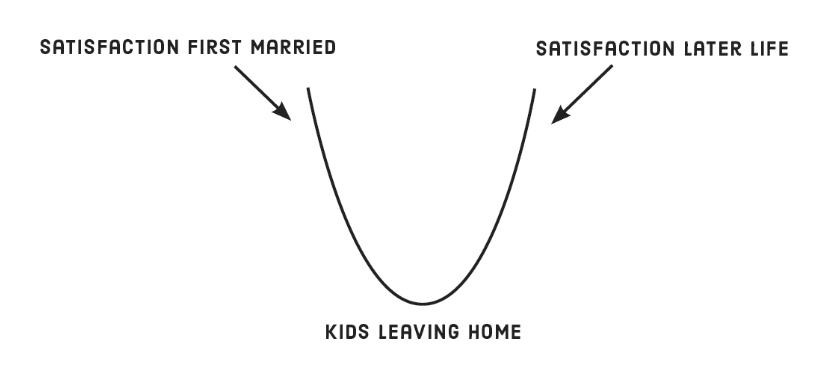
Even though I do not personally think that the arrival of a child is the “end” of the couple, I agree that the couple goes through a phase of readaptation but that it is also a beautiful phase of life with a lot of love where you are founding a family together and where you discover your partner from a completely different angle.
My first crisis at the arrival of our child
You are not alone, many couples go through this phase.
At the arrival of our son, we also went through this crisis. We had many conflicts on many subjects: education, the way of looking after one’s child, the place of the family versus the couple, the right or not to take time for oneself.
It was not only problems where we had to agree, it raised deeper wounds about what is a good father, what is a good mother, what happens if one does not take care of one’s couple, inherited parental models….
Finding agreement on the surface topics was not possible without addressing the underlying issues.
The first urgency: getting out of survival mode
In terms of the nervous system, this surplus of stress especially if it becomes chronic for more than 6 months, can truly bring about a dysregulation of the nervous system and you can have the impression of being in survival mode since the birth of your child.
If you or both of you feel this is the case, the first priority is to find a way to put an end to this chronic stress and bring sufficient resources to your nervous system:
- Sleep: What can you put in place so that you manage to sleep enough to feel “rested”: one parent is “on duty” at night and the other isolates themselves to be able to sleep without being woken, the one who goes to bed later does the evening watches and the one who is more of a morning person does the morning watches, give your child to the grandparents when possible to sleep. Without sufficient sleep, your nervous system CANNOT return to a more regulated state.
- The woman’s health: Provide all the nutrients and supplements so that your body can regenerate after pregnancy (your body drew on everything necessary for the baby’s production at the expense of your own balance), make sure that hormonal balance is restored properly, if you have scars get them properly treated, take care of your perineum and its rehabilitation. Here this may mean that the husband gives his wife the time to take care of herself and they discuss who will take on the budget this implies.
- Using somatic approaches to support the nervous system: pay attention to your bodily sensations, use breathing techniques like cardiac coherence or the physiological sigh to relieve your nervous system, go out into nature, be careful not to overstimulate your cortisol level which is already in surplus due to chronic stress, for example by avoiding overly intense sports (HIIT), cold baths, screens (blue light disrupts the circadian rhythm). This does not mean doing no sport at all because the sympathetic state creates a surplus of energy in the body and this energy surplus needs to “come out” so that the body can return to its state of security, the ventral vagal state, but this sporting activity must remain gentle. To this end all the advice given by Mme Vasey in episode 75 on burnout such as walking are valid because the body is truly physiologically in the same state.
- Give each parent moments for themselves so that they can do what they want and find “their life before” again.
- Find an organisation that respects the child’s needs and your own. Look at what can be eliminated from your to-dos (is it essential to iron one’s sheets…), what can be delegated (cleaning, shopping…) and ask for help. You will know you have found this balance when you think about your week without already feeling tired or overwhelmed or asking yourself how you are going to manage.
Reinventing your time as a couple
Here quality takes precedence over quantity. Even if at first a baby/child sleeps a lot and you manage to have more time together in terms of quantity, this does not mean it is quality time.
Ask yourselves instead what would be a quality moment for you:
- Is it a moment during the day rather than in the evening? Why not have a brunch during the first morning nap?
- Is it seeing each other outside the home? Why not have someone look after the baby for 2 hours and go for lunch with your husband in date mode?
Conscious efforts to get out of this crisis
What is crucial is not to sweep this crisis under the carpet and think it will resolve itself. The underlying issues will not resolve themselves and will continue to impact your life as a couple and as co-parents. For this it is necessary in my view to go through these three steps which I describe in more detail in episode 47 Overcoming a crisis
Understanding the underlying wounds of the crisis
- Is a partner wanting to avoid repeating what they experienced in childhood?
- How does the arrival of a child confront a partner with their loss of freedom, with ageing?
- How does a partner find themselves through their different hats: woman, worker, parent, friend…?
For you
FREE Webinar "HOW TO FREE OURSELVES FROM THE PATTERNS THAT PREVENT US FROM BEING HAPPY IN LOVE?"
Subscribe now to my newsletter and receive the replay of the webinar how a wound from the past is created ?
* Mandatory fields
If you register for this webinar, you will be subscribed to my newsletter and you will be able to receive offers from me. You can unsubscribe at any time. Please read my
privacy policy (german only), to see how I process the data.
Calming the crisis
To overcome the underlying wounds of the crisis, each partner needs time. During this time, it is important to calm the conflict dynamic in the couple to avoid a point of no return. To this end a first step would be to list the “touchy subjects” and/or the circumstances that reactivate conflicts (the timing of a discussion, the way a partner acts…) and to consciously decide when you want to work on these subjects and when you decide to consciously avoid them in order to reconnect.
Overcoming the crisis
When the dynamic is calmer, dialogue becomes more constructive and that is when solutions are found. At this stage, the risk is no longer wanting to dig up what has been swept under the carpet and accepting the status quo, which is easier honestly but in the long term will contribute to a greater disconnection of the couple.
This requires each partner to work on the underlying wounds of this crisis AND the couple to find win-win solutions.
If I give you my example back:
- I had to work on my vision of the mother I wanted to be which is different from my parental model and aligned between my need for freedom and my desire to be there for my child. I had to work on the shortcomings I perceived in my relationship with my mother and free myself from the fear and guilt of repeating her model if I took more time for myself.
- My husband had to give himself the right to think of himself and to not systematically sacrifice everything for our child. He also had to detach himself from his parental model and dare to be more selfish.
- As a couple we had to redefine our educational model. I moved away from the authoritarian French educational model. Even though I completely understood its lack of usefulness for the child and its impact on the nervous system, I still had “the automatisms” of the education I had received. My husband moved away in part from the educational model without limits where everything was permitted (which is not better for the nervous system — I talk about it in episode 157 where I talk about the impact of the relationship with your parents in your love life.)
- As a couple we had to agree on the place of the couple versus the family. This is what I call a perpetual problem because it is part of our differences of point of view and is therefore a subject that regularly comes back to the table at each evolution of the family.
Going further
Your couple needs care.
To maintain connection, spending good moments together is not enough. It is important to resolve underlying conflicts to avoid accumulating too much dust under the carpet which causes the couple to disconnect and each partner to feel misunderstood by the other.
This is what you learn in my programme Cultivating Love.
Tu as sinon mon livre Les couples heureux…osent aborder les sujets qui fâchent disponible dans toutes les librairies.
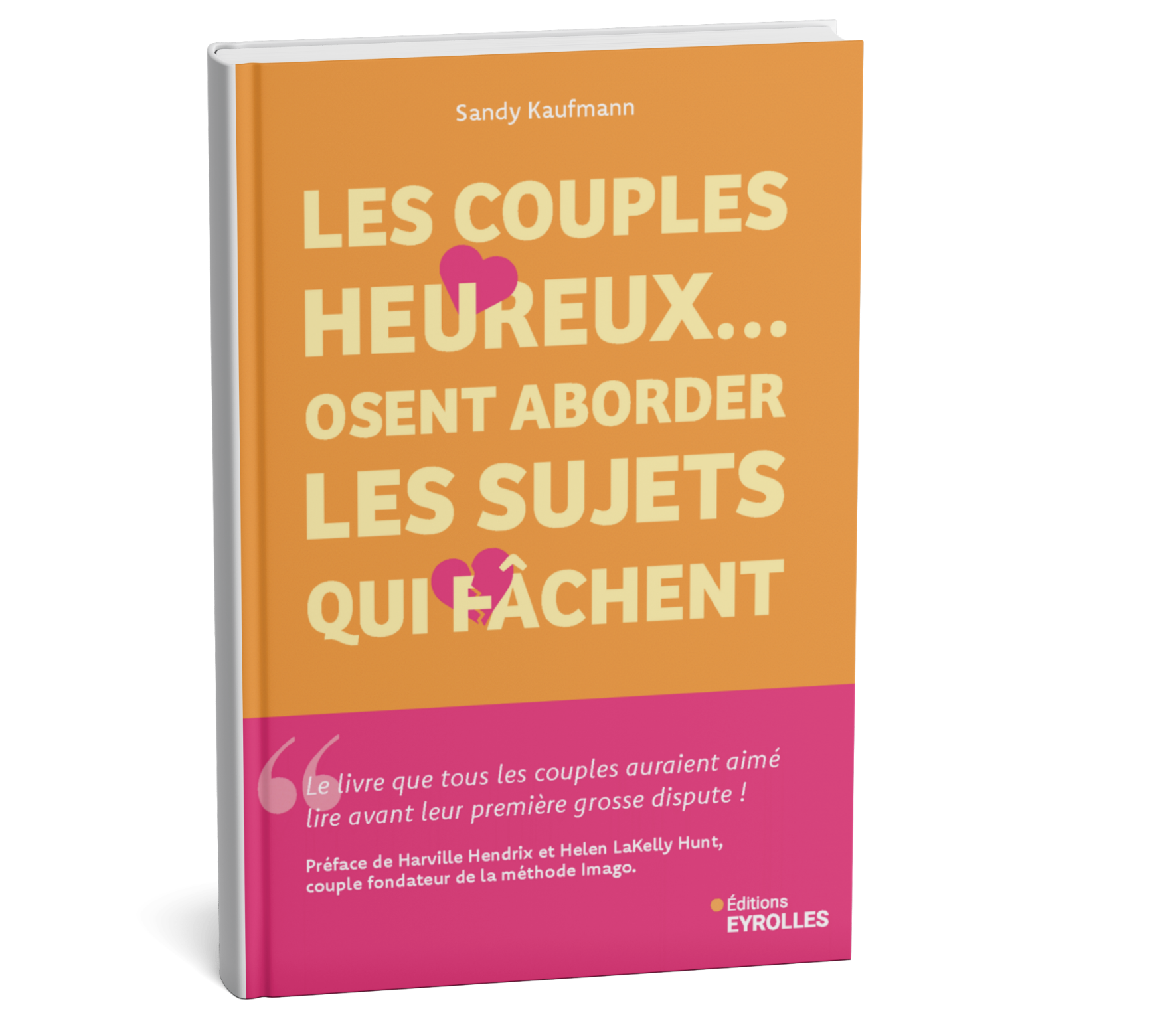
Contrairement aux idées reçues, les couples qui durent ne sont pas ceux qui évitent les conflits mais qui savent les traverser. Le livre Les couples heureux..osent aborder les sujets qui fâchent t'explique comment transformer vos tensions en connexion en 5 étapes!
Sandy Kaufmann
is a somatic therapist and coach, based in Switzerland. She is the author of two books published by Éditions Eyrolles and has accompanied more than 600 people. She is the creator of the Somatic Deprogramming method and hosts the podcast “S’ouvrir a l’amour“, ranked in the French top 50 in the relationships category.
Table des matières


